viernes, 9 de agosto de 2013

Digital Graffiti

Digital graffiti is the act of creating graffiti art using a computer vision system. Various groups and companies have pioneered digital graffiti since technology advances made it possible. Most notably is the Graffiti Research Lab based in the US with their L.A.S.E.R. Tagsystem.
Inspired by the New York laser graffiti movement, in 2008 the first commercially available digital graffiti wall was produced by Luma, named the YrWall. A specially adapted spray can emits IR light instead of paint, which is then tracked by a computer vision system to recreate the "sprayed" image onto the wall using a projector.
Any system that allows art to be created on a large scale in a similar manner to more traditional graffiti falls under the heading digital graffiti.


------------------------------------------------------------------------


Body Graffiti

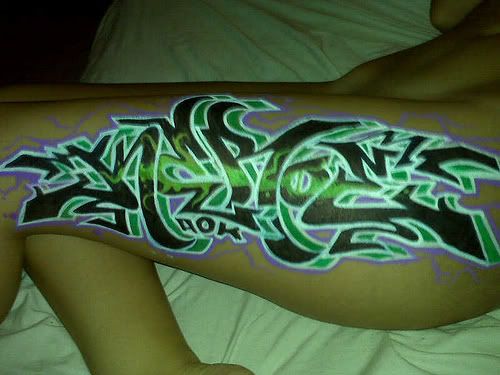
Body graffiti is one of the different cultures in graffiti terms.
It consists in using a body (usually female) and use it as a canvas for you'r piece.

Piece: A graffiti sketch or throw up it's called a Piece.


--- The first person to do a body paint (graffiti style) was Taki 183 ---


jueves, 8 de agosto de 2013

How to Remove Graffiti.

Removing graffiti should be done at the earliest time possible. Paint is easier to remove when it is not yet been absorbed into the surface. Paint and other graffiti removal products can be kept ready, to remove graffiti immediately as soon as they are written.
According to graffiti removal tips, the first step to consider is to identify the type of the vandalized surface. Using graffiti removal products with extra strength is advisable for tough surfaces. After applying the graffiti remover, use brush with wire bristles in order to reach pores and holes. Allow the graffiti remover to take effect before washing over with pressured stream of water or soda blaster.
In most cases, graffiti removal products with solvents are the effective in many types of surfaces. Solvent is a liquid substance that has the capability to dissolve another substance. Graffiti removal tips suggest choosing the appropriate solvent in order to perform the cleaning easier. When the wrong solvent is used, it will be instrumental in damaging rather than cleaning. It is necessary to understand solvent properties before buying.


About Graffiti.

Graffiti is the plural of graffito, which is a term derived from Greek graphein that means “to write”. Graffiti means a scribbling or drawing on a wall or any flat surface. Graffiti can be a simple mark or an intricate and colorful work of art. The intention in creating these marks varies. It could be an inner desire for a public acceptance and appreciation or the need to utilize a public space or a person’s private space for an individual or group’s recognition or communication, and other purposes. With the very nature of graffiti being illegitimate, most of these are done on public toilets, buses, walls of garages, trains and jail chambers in order to convey underground messages.
Graffiti can also be an art, a form of self expression that even if illegal is not necessarily vandalism. These markings or form of art is created with the use of paint, ink, scratches and other possible ways in order to put across a message or express one’s self. The most popular tool for fast and easy execution is the spray paint cans. However, it must be understood that graffiti as an art should not be identified with other markings or writing on the walls that are offensive or violent like uptown graffiti that uses foul language and rough drawings of obscene subjects. Graffiti is not vandalism as many people mistook it for, and it is not done to damage properties and off-limit areas such as churches or any place of worship, residential properties, and cemeteries.
To a few, the definition of graffiti is simply an artistic vandalism. Even if the graffiti was made with utmost artistry by an incredibly talented graffiti artist, if it is done on public walls or any public flat surface, it is still considered vandalism and has become a huge outdoor problem for our society. Graffiti has always been surrounded by an immense deal of controversy concerning its legality and validity. While, many appreciate graffiti as a progressive and meaningful form or art, others consider it as unpleasant, useless damage both to private and public property.
The first appearance of graffiti was found in areas such as Rome, Pompeii, Tivoli, and Mesoamerica. However, graffiti is more commonly associated with twentieth-century urban communities, especially in the United States.

Seventh Letter in Graffiti Industry.


-------------------------------------------------------------------------------


Artistic Graffiti.

-GRAFFITI CANVAS-


-GRAFFITI MURAL-


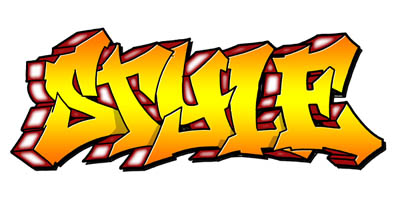
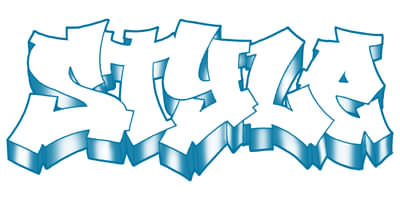
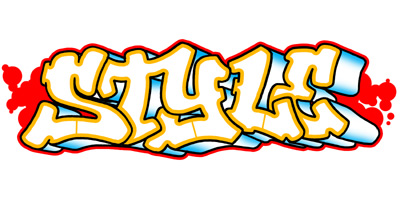
Graffiti Techniques.

WILDSTYLE

BOMBING

TAG'S

WIGGLES BBOY

CHINESSE STYLE

SOFTY

Politic Issues with graffiti.

Graffiti often has a reputation as part of a subculture that rebels against authority, although the considerations of the practitioners often diverge and can relate to a wide range of attitudes. It can express a political practice and can form just one tool in an array of resistance techniques. One early example includes the anarcho-punk band Crass, who conducted a campaign of stenciling anti-waranarchistfeminist, and anti-consumeristmessages throughout the London Underground system during the late 1970s and early 1980s.


The student protests and general strike of May 1968 saw Paris bedecked in revolutionary, anarchistic, and situationist slogans such as L'ennui est contre-révolutionnaire ("Boredom is counterrevolutionary") and Lisez moins, vivez plus ("Read less, live more"). While not exhaustive, the graffiti gave a sense of the 'millenarian' and rebellious spirit, tempered with a good deal of verbal wit, of the strikers.

What is graffiti?

Graffiti (singular: graffito; the plural is used as a mass noun. Also known as Graff) is writing or drawings that have been scribbled, scratched, or sprayed illicitly on a wall or other surface in a public place. Graffiti ranges from simple written words to elaborate wall paintings, and it has existed since ancient times, with examples dating back to Ancient Egypt, Ancient Greece, and the Roman Empire.
In modern times, paint, particularly spray paint, and marker pens have become the most commonly used graffiti materials. In most countries, marking or painting property without the property owner's consent is considered defacement and vandalism, which is a punishable crime.

¿How did the graffiti started?


TAKI 183 was one of the most influential graffiti writers in its history. His "tag" was short for Demetraki, a Greek alternative for his birth-name Demetrius, and the number 183 came from his address on 183rd Street in Washington Heights. He worked as a foot messenger in New York City and would write his nicknamearound the streets of New York City that he frequented during the late 1960s and early 1970s.
On July 21, 1971, The New York Times ran an article about him on the front page of its inside section, titled "Taki 183" Spawns Pen Pals. TAKI 183 spurred competitive vandalism in NYC as his tag was mimicked by hundreds of youth across the five boroughs. The kids who got their names up the most and who developed signature tags became known in their communities. Graffiti became a way for many young kids to try to get attention and the attention TAKI 183 received spurred this on.